
Eyebrow: CATCH IT EARLY
Signs of Water Damage: What Memphis Homeowners Should Watch For
Most water damage isn’t discovered — it’s noticed, weeks or months late, when a ceiling sags or a smell won’t leave. The water itself was quiet: a slow supply-line seep inside a wall, groundwater wicking through a Midtown basement floor, a roof leak that only runs during the violent spring storms Memphis specializes in. By the time the sign is obvious, the damage is structural, the mold clock has run out, and the insurance company is asking why you waited.
This guide teaches you to read your house the way a restoration professional does — the visible signs, the invisible ones, and the critical skill of telling “monitor it” from “call now.” In a city with 55 inches of annual rain, 60–80% summer humidity, clay soil, high water tables, and a housing stock with a median build year of 1979, this isn’t paranoia. It’s maintenance.
The visible signs: what your eyes can catch
Walk your home twice a year with this list. Each of these is water telling on itself:
Water stains. Yellow-brown rings on ceilings and walls — the classic. Stains grow outward from the entry point, so the darkest center is usually closest to the source. A stain that darkens or expands after rain points to a roof or exterior issue; one that grows steadily regardless of weather points to plumbing.
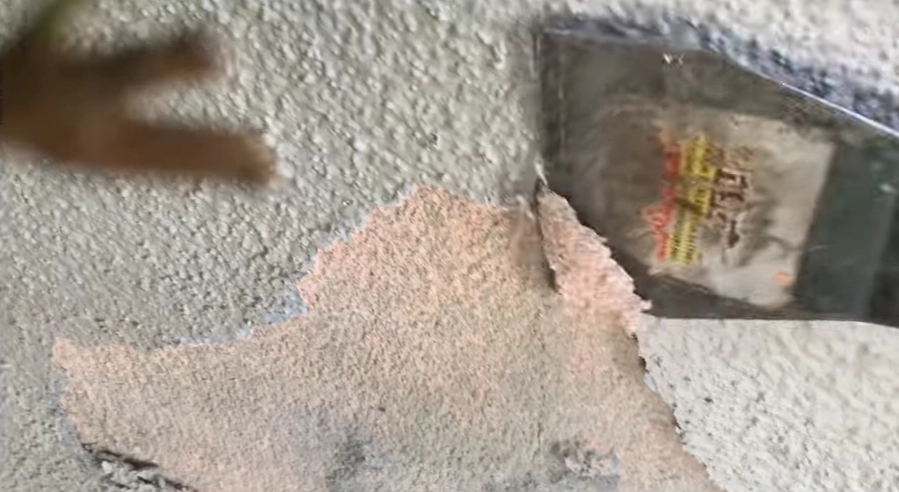
Peeling, bubbling, or flaking paint. Paint fails when moisture pushes from behind it. Bubbling on a bathroom ceiling, peeling on an exterior wall after storms, flaking around windows — all of it means water is moving through the material, not just sitting on it.
Warped or buckling flooring. Hardwood that cups or crowns, laminate edges that swell, tile that sounds hollow or has cracked grout, vinyl that bubbles. Flooring is often the first visible casualty because it sits at the water’s collection point.
Sagging ceilings. A ceiling that bows downward is holding water right now. This is a “call now” sign — saturated drywall is heavy, and it fails suddenly. Don’t poke it to “check.”
Swollen trim and baseboards. Baseboards that pull away from walls, door frames that swell shut, cabinet toe-kicks that darken — water wicks upward through wood, and trim shows it first.
Rust and corrosion. Rust on water heater fittings, supply-line connections, or appliance hoses means chronic moisture — and often predicts the failure that’s coming.
Cupping vs. buckling: what your hardwood floors are telling you
Hardwood is Memphis’s most emotionally expensive flooring — original oak in Midtown and East Memphis homes is worth saving, and it speaks a precise language about water:
- Cupping — the edges of each board rise higher than the center, like a shallow bowl. This means moisture entered from below (subfloor dampness, crawlspace humidity, a slow leak underneath). Cupping can sometimes be reversed with professional drying if caught early — the boards relax as moisture equalizes.
- Buckling — boards lift entirely off the subfloor, tenting upward. This is severe: the wood has absorbed so much water it expanded beyond what the fasteners can hold. Buckled flooring almost always requires replacement of the affected boards.
- Crowning — the reverse of cupping (center higher than edges), usually caused by sanding cupped floors before they finished drying. If a contractor suggests sanding your cupped floor immediately, that’s a red flag — know the vetting checklist.
The Memphis note: with summer humidity at 60–80%, hardwood lives in a constant moisture negotiation. Normal seasonal movement is slight and uniform. Localized cupping in one area — near a bathroom, under a window, above a crawlspace — isn’t seasonal. It’s a leak talking.
The invisible signs: what your nose, bills, and walls know
The dangerous water damage is the kind you can’t see. These are its tells:
Musty odor. That damp-basement, old-sponge smell is microbial volatile organic compounds — mold and bacteria off-gassing. If a room smells musty, something is wet, even if everything looks dry. Follow your nose to the source: behind the smell is usually a wall cavity, subfloor, or crawlspace problem.
A water bill that spikes for no reason. Your MLGW bill is an early-warning system most homeowners ignore. A sudden, sustained jump with no change in usage means water is going somewhere it shouldn’t — a slab leak, a running toilet fill valve, a supply line seeping inside a wall. Compare month to month; the bill often knows before you do.
Humidity that won’t drop. A room or basement that stays clammy while the rest of the house is comfortable suggests active moisture — groundwater seepage, a hidden leak, or drainage pushing water against the foundation. In Memphis’s already-humid climate, the baseline is high; a localized damp zone is the signal.
Efflorescence on basement or foundation walls. Those white, chalky mineral deposits on concrete or brick mean water is moving through the masonry and evaporating off the surface, leaving minerals behind. It’s proof of water migration even when the wall feels dry to the touch.
Cold spots and condensation patterns. A wall section that’s persistently cooler, windows that fog on one side, condensation on pipes in summer — all indicate moisture dynamics worth investigating.
Allergy symptoms that track to a room. Congestion, sneezing, or headaches that appear in one part of the house and clear elsewhere can indicate hidden mold — the body’s moisture meter.
“Is the damage just the drywall, or could it be structural?”
This is one of the most-asked DIY-forum questions in America — “…is the leak damage just on the drywall on ceiling? Or could it have potentially caused damage to any wood or anything structural in between?” — and it’s exactly the right fear. Here’s how professionals think about it:
Drywall is the messenger, not the whole story. Drywall wicks water upward and shows stains fast, which makes it look like the main event. But behind that drywall: insulation (which holds water like a sponge and loses its R-value permanently when wet), framing lumber (which can develop mold and, over time, rot), and in ceilings, the subfloor or joists of the level above.
What determines “structural”: duration and category. Clean water caught in days mostly affects finishes. Water that sat for weeks — or gray/black water at any duration — reaches framing, subfloors, and sill plates. In Memphis crawlspaces, USDA research has found wood moisture among the worst nationally, meaning structural wood here starts wetter and rots faster.
How to know without tearing everything open: moisture meters (penetrating probes read inside materials), thermal imaging (shows temperature differentials from evaporative cooling), and in crawlspaces, a visual inspection of joists for discoloration, softness, or fungal growth. If a contractor proposes a scope based only on what stains are visible, get a second opinion — here’s how to vet one.
“Can I put Kilz over the spots and repaint, or do I need to replace the sheetrock?”
The other great DIY-forum question — “Can I put Kilz over the spots and repaint or do I need to replace the sheetrock?” — and its darker twin: “My contractor says he will paint it and seal it… Shouldn’t the ceiling be changed?”
The honest answer: stain-blocking primer (Kilz and its equivalents) is a finishing step, not a drying step. It seals a stain cosmetically after the material is verified dry and the source is fixed. It does nothing about moisture still inside the wall, mold growing on the back of the drywall, or saturated insulation behind it.
Replace the drywall when: it’s soft, sagging, or crumbling; it was wet from gray or black water (Category 2–3 — contaminated drywall doesn’t get saved); the back side shows mold growth; or insulation behind it is saturated (wet insulation is removed, always — it doesn’t dry in place usefully).
Prime and repaint when: the source is fixed, the material is verified dry with a moisture meter, there’s no contamination, and the drywall is still structurally sound. Then stain-blocker, then paint.
If your contractor’s whole plan is “paint and seal it” — with no moisture verification, no source repair, no discussion of what’s behind the stain — that’s the contractor-cutting-corners fear from the forums, and it’s justified. Get the assessment in writing.
Where Memphis homes hide water damage
Certain spots in Memphis houses fail so often they deserve their own patrol route:
- Crawlspaces. The city’s worst-kept secret: dark, humid, rarely inspected, and sitting over some of the wettest wood in the country per USDA data. Check annually — look for standing water, vapor barrier condition, and joist discoloration.
- Under sinks and behind toilets. Slow supply-line and drain seeps live here for months. Look for warped cabinet floors and musty smells.
- Around water heaters. The average water heater fails catastrophically eventually; the warning signs are rust at fittings and moisture at the base. Know its age.
- Attics after storm season. Memphis’s violent spring storms drive rain under flashing and through vulnerable roof penetrations. Check the attic after major storms, not just the ceilings below.
- Behind washing machines and dishwashers. Supply hoses burst; drain hoses back up. Pull the appliances annually and look.
- Basement wall-floor joints. In Midtown’s high water table, hydrostatic pressure pushes water through the cove joint where wall meets floor — the classic seep line.
- Window wells and below-grade window frames. East Memphis flash-flood pattern: water pools against below-grade windows and comes in around the frames.
Triage: “call now” vs. “monitor and verify”
| Sign | Verdict | Why |
|---|---|---|
| Sagging ceiling | Call now | Holding water; can collapse |
| Active leak you can’t stop | Call now | Every hour multiplies damage |
| Sewage or foul-smelling water | Call now | Category 3 health hazard |
| Water near electrical | Call now (and stay out) | Shock hazard |
| Spreading stain after storms | Call soon | Active intrusion; source needs finding |
| Musty odor with no visible source | Call soon | Hidden mold/moisture likely |
| Small, stable old stain (dry, verified) | Monitor | Document, check after next rain |
| Minor condensation on pipes | Monitor | Insulate; watch for change |
| Slight seasonal hardwood movement | Monitor | Normal in 60–80% humidity; localized cupping is not |
When in doubt, make the call — the assessment answers the question. Water damage restoration services are available across Memphis and Shelby County — call (901) 286-9686 to request a professional assessment.
Water damage signs questions — straight answers
What are the first signs of water damage in a house?
Water stains on ceilings or walls, peeling or bubbling paint, musty odors, warped flooring, and an unexplained spike in your water bill. In Memphis, also watch for efflorescence (white mineral deposits) on basement walls and localized dampness that doesn’t match the rest of the house.
What is the most common cause of water damage in houses?
Plumbing failures lead nationally — burst or leaking supply lines, failed appliance hoses, water heater ruptures. In Memphis specifically, add flash-flood intrusion during storm season (April–September), groundwater seepage from the high water table in Midtown, and freeze-burst pipes in winter outbreaks like 2021 and 2024.
Can water damage be hidden inside walls?
Yes — and it usually is. Drywall shows stains, but insulation, framing, and wall cavities hold far more water invisibly. Professionals locate it with penetrating moisture meters and thermal imaging. “Feels dry” on the surface means nothing about what’s inside the wall.
Does a musty smell always mean mold?
Not always, but it almost always means moisture — and moisture becomes mold within 24 to 48 hours in Memphis humidity. A persistent musty odor with no visible source warrants a professional moisture inspection; the source is usually a wall cavity, subfloor, or crawlspace you can’t see.
Why is my water bill suddenly so high?
A sustained spike with no usage change typically means a leak: running toilet, slab leak, seeping supply line, or an outdoor line break. Check your MLGW bill month-to-month — it’s often the first detector of a hidden leak, sometimes weeks before any visible sign.
How do I know if water damage is old or new?
New damage: active dampness, darkening stains, musty odor developing, materials still wet to a meter. Old damage: dry, stable stains with no odor change, often with previous repair attempts visible. A moisture meter settles arguments — and the distinction matters enormously for insurance, which covers sudden damage but excludes long-term leaks.
Your house is talking. Learn to listen.
Twice a year, walk the patrol route: stains, paint, floors, trim, the water bill, the crawlspace, the attic after storms. Catching water damage at the stain stage instead of the sagging-ceiling stage is the difference between a repair and a restoration.
And if something on this list looks familiar right now — don’t wait for it to become the next section’s problem.
Call (901) 286-9686 — request a professional moisture assessment
Memphis Water Damage Restoration · 4040 Delp St, Memphis, TN 38118 · Serving Shelby County & the Mid-South