Water Damage Restoration in Downtown Memphis, TN
Nobody in Memphis lives closer to the water than Downtown. The Mississippi River defines the western edge, Mud Island and Harbor Town sit nearly in it, and the low-lying streets around South Main, the Pinch District, and Uptown are exactly where flash flooding goes when the storm drains surrender. Downtown water damage has its own character: river-adjacent flooding, multi-unit buildings where one leak becomes five problems, and historic commercial structures with aging plumbing and roofs.
Water damage restoration services are available across Downtown Memphis — South Main Arts District, Harbor Town, Mud Island, Uptown, Victorian Village, the Medical District, and the Edge District. Call (901) 286-9686 to request an assessment.
Low ground, big river
Downtown’s flood exposure comes in two flavors. The first is the river itself: when the Mississippi runs high, tributary backwater — the Wolf River, Nonconnah Creek, the Loosahatchie — backs up into low areas. The May 2011 flood was the textbook case, with backwater flooding roughly 3,000 properties across the metro. The second is flash flooding: violent spring and summer bursts overwhelm low-lying streets, parking garages, and basement-level storage before drainage can catch up.
For Downtown residents, that means water in parking structures, storage cages, and ground-floor units — plus the particular misery of a flooded elevator pit or a soaked lobby. For businesses along Beale Street, near the Pyramid, and around the National Civil Rights Museum corridor, it means inventory, finishes, and downtime.
Standard homeowners (and condo/renters) policies typically exclude external flooding without separate NFIP flood insurance — a distinction that matters more Downtown than anywhere else in the city. If you’re anywhere near the riverfront or in a known low spot, know which policy you hold before the water arrives.
When water moves between units
Downtown is condo and loft country — converted warehouses on South Main, newer towers, Harbor Town townhomes — and multi-unit buildings change the water damage equation completely. A supply-line failure or overflowing fixture on the third floor doesn’t stay on the third floor. Water migrates down through floor assemblies, inside wall cavities, and along utility chases, surfacing two units away from the source.
This creates three headaches single-family homes don’t have:
- Finding the source requires access to units that aren’t yours, which means coordinating with building management or the HOA.
- Responsibility gets murky. The unit owner where the leak started, the HOA’s master policy, and affected neighbors’ individual policies can all be in play. Documentation — photos, moisture readings, timelines — decides who pays for what.
- Drying is constrained. Containment has to protect common areas and neighboring units, and structural drying has to account for shared assemblies.
If you manage an HOA or a Downtown rental portfolio, the playbook is simple: know your main water shutoffs (building-level, not just unit-level), keep our number accessible to your maintenance team — (901) 286-9686 — and photograph everything before anyone starts tearing out drywall.
Older commercial buildings
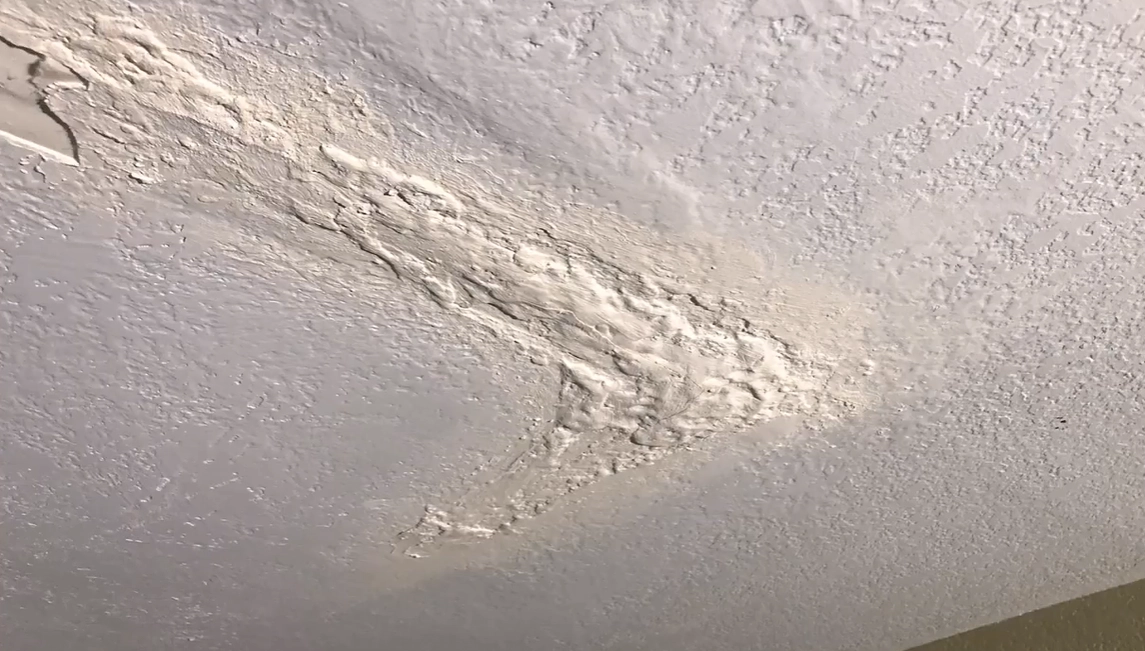
Downtown’s historic building stock — century-old brick commercial structures, converted industrial spaces — brings aging roofs, original plumbing runs, and flat-roof drainage that clogs with one season of neglect. Roof leaks after spring storms are a recurring Downtown story: water enters at the roof, travels inside parapet walls, and appears as ceiling stains two floors down. By the time paint bubbles, the assembly above has been wet for a while.
Commercial work also means working around tenants, protecting inventory and equipment, and producing the kind of documentation — moisture logs, photo timelines, line-item scopes — that business interruption and property claims require.
What to do when you find water Downtown
- Protect people first. Standing water near electrical, in parking garages with vehicle traffic, or in common areas is a safety issue — keep people clear and kill power to the area if it’s safe to do so.
- Notify building management or your HOA immediately if you’re in a multi-unit building. The source may be in another unit or a common line.
- Stop the source if you can — unit shutoff valve, then building main. Don’t wait for permission to stop active flooding.
- Document relentlessly. Photograph the source, the spread, water lines, and damaged belongings. In multi-unit situations, your photos are your leverage with insurers and HOAs alike.
- Call (901) 286-9686. Describe the building type and what you’re seeing — you’ll get a straight answer on urgency and next steps.
Downtown Memphis water damage questions — straight answers
Water leaked from the unit above mine — who’s responsible?
It depends on the cause and your building’s documents. Typically the owner where the leak originated is responsible for the source repair, while damaged finishes may fall to affected owners’ HO-6 policies and the HOA’s master policy for common elements. Document everything — photos, dates, moisture readings — and notify building management in writing immediately. A professional assessment gives every insurer involved the same facts.
Is it safe to stay in a condo with water damage?
Often not until it’s assessed. The concerns are the same as anywhere — electrical hazards where water meets wiring, contaminants if the water is gray or black category, and Memphis’s 60–80% humidity growing mold within 24 to 48 hours — compounded by shared ventilation and wall assemblies. Get a professional moisture assessment before deciding to stay.
How does water damage restoration work in a loft or condo?
The five phases are the same — inspection and moisture mapping, extraction, structural drying, cleaning, restoration — but execution routes around building realities: coordinating access with management, containing work areas to protect neighbors and common spaces, and drying shared assemblies without tearing apart someone else’s unit. Expect more coordination and more documentation than a single-family job.
Does renters insurance cover water damage?
Renters (HO-4) policies typically cover your belongings against sudden water events — a burst pipe soaking your furniture, for example — but not the building itself, and not flooding without separate flood coverage. They also don’t cover gradual leaks you failed to report. Report water issues to your landlord in writing the day you find them; delays weaken both your claim and your position.
What should I do first when I find water damage Downtown?
Ensure safety around electricity, notify building management or your HOA, stop the source if accessible, photograph everything, and call (901) 286-9686. In multi-unit buildings, speed matters twice: water migrates fast through shared assemblies, and the paper trail you create in the first hour shapes the entire insurance conversation.
Downtown water damage? Move fast — water migrates.
In a Downtown condo, loft, or commercial building, an hour of delay isn’t just more damage to your space — it’s someone else’s ceiling. Call (901) 286-9686 to request service anywhere Downtown, from Harbor Town to South Main.
Memphis Water Damage Restoration · 4040 Delp St, Memphis, TN 38118 · (901) 286-9686 · Serving Downtown Memphis, Shelby County & the Mid-South