
Eyebrow: Reconstruction & repairs · Memphis, TN
Water Damage Repair in Memphis, TN: The Honest Rebuild Guide
The dry-out crew came, the fans ran for a week, and now you’re staring at cut-open walls, a missing chunk of ceiling, or flooring stacked in your garage — wondering who actually puts your house back together. This is the phase most Memphis homeowners are least prepared for, and the one where the most money gets wasted: the rebuild.
If you’ve been scrolling r/memphis asking strangers for a GC recommendation for your water-damaged remodel, you’re not alone. Nobody owns this part of the conversation in the Mid-South — the mitigation companies talk about extraction and drying, and the remodeling contractors talk about kitchens, but almost nobody talks honestly about what happens between the two. This page is that conversation: what truly needs replacing versus sealing, how professional reconstruction works, what it costs, and how to avoid getting burned.
Call (901) 286-9686 to request help with your water damage repair in Memphis — and get honest answers about what your rebuild actually needs.
When water damage turns into a rebuild
Not every water incident needs reconstruction. A small supply-line drip caught the same day can dry out and disappear with no new drywall. But most of the jobs that reach the rebuild stage share a pattern: water ran long enough, or sat long enough, to ruin materials that can’t be dried back into shape.
In Memphis, the usual suspects are depressingly consistent. Supply-line failures — to toilets, icemakers, washing machines — run silently behind walls or under cabinets for hours. Appliance leaks from dishwashers and water heaters soak kitchens and laundry rooms, where cabinetry and flooring take the hit first. Bathroom failures — failed grout and caulk, leaking shower pans, overflowing tubs — rot subfloors slowly enough that homeowners discover the damage when a tile goes spongy or the ceiling below stains. And every freeze cycle — February 2021, January 2024 — bursts pipes across the Mid-South overnight, flooding rooms that were fine at bedtime.
Reconstruction, done properly, returns the property to pre-loss condition: the industry term for the professional standard where the rebuilt area matches what was there before the loss — same drywall, same or equivalent flooring, trim reinstalled, paint matched. It’s not a remodel upgrade (unless you want it to be) and it’s not a cosmetic cover-up. Understanding that standard is your best defense against both under-built repairs and overpriced ones.
Wondering what the whole thing might cost? Read the honest water damage restoration cost guide
Seal and paint, or tear out and replace? The honest answer.
This is the question at the heart of almost every rebuild dispute — and it’s the one nobody in Memphis answers straight. Here’s the professional standard, stripped of sales language:
Paint and seal (a stain-blocking primer like Kilz, then paint) is the right call when the material is dry, firm, and flat — stained but structurally sound. It handles surface discoloration from a small, resolved leak. It’s also the right call when the material’s back side has been verified dry with a moisture meter, because surface appearance says nothing about what’s happening inside.
Tear out and replace is the right call when the material is soft, crumbly, sagging, swollen, or still damp — or when it was exposed to contaminated water (Category 2 or 3), which no amount of primer can sanitize inside porous drywall. Sagging ceiling drywall doesn’t just look bad; weakened gypsum can fail entirely, dropping a ceiling panel months later.
The shortcut temptation is real — a can of primer is cheap, and a contractor who says “we’ll just paint and seal it” is offering you the easy version of the story. But in Memphis, where summer humidity runs 60–80%, sealing moisture inside a wall cavity is how you get mold growing behind a “repaired” wall within weeks. The primer didn’t fail; the diagnosis did.
| Situation | The right call | Why |
|---|---|---|
| Light staining on dry, firm drywall after a resolved leak | Seal + paint (stain-blocking primer) | Paper face and gypsum are intact; only cosmetics need fixing |
| Soft, crumbly, or sagging drywall | Tear out + replace | Gypsum has lost structural integrity; primer can’t restore it |
| Stain that keeps bleeding through after priming | Replace the section | Indicates deep saturation or ongoing moisture behind the surface |
| Wet insulation behind the wall | Remove insulation + drywall, dry the cavity, reinstall | Wet insulation holds moisture against framing and feeds mold |
| Ceiling stained but probed dry and firm | Seal + paint | A resolved surface event with no structural damage |
| Ceiling drywall that sags or feels spongy | Full replacement | Saturation has compromised the gypsum; collapse risk is real |
| Any drywall touched by Category 2 or 3 water | Remove and replace affected sections | Porous materials can’t be reliably sanitized after contamination |
The one question that settles it: “Did you check it with a moisture meter?” A contractor who probes the material before recommending paint-over is diagnosing. A contractor who quotes seal-and-paint without checking is guessing — and in this business, guessing gets expensive.
If water is still present, start with emergency water removal first
What professional reconstruction actually includes
Reconstruction isn’t one task — it’s a sequence, and the order matters. Each layer has to be verified dry before the next goes in, because every layer you install over damp material seals the moisture in.
Drywall and insulation. Flood cuts and tear-outs from the mitigation phase get replaced with new drywall, finished and textured to match the surrounding wall. Wet insulation comes out with the soaked drywall — it can’t be dried in place and it insulates nothing while damp. In Memphis homes, where the median build year is 1979, this step has a complication: many walls hold plaster rather than modern drywall, and plaster repair is a specialist skill that costs more than a standard drywall patch. Older homes also hide original framing and wiring configurations that change how a rebuild is sequenced.
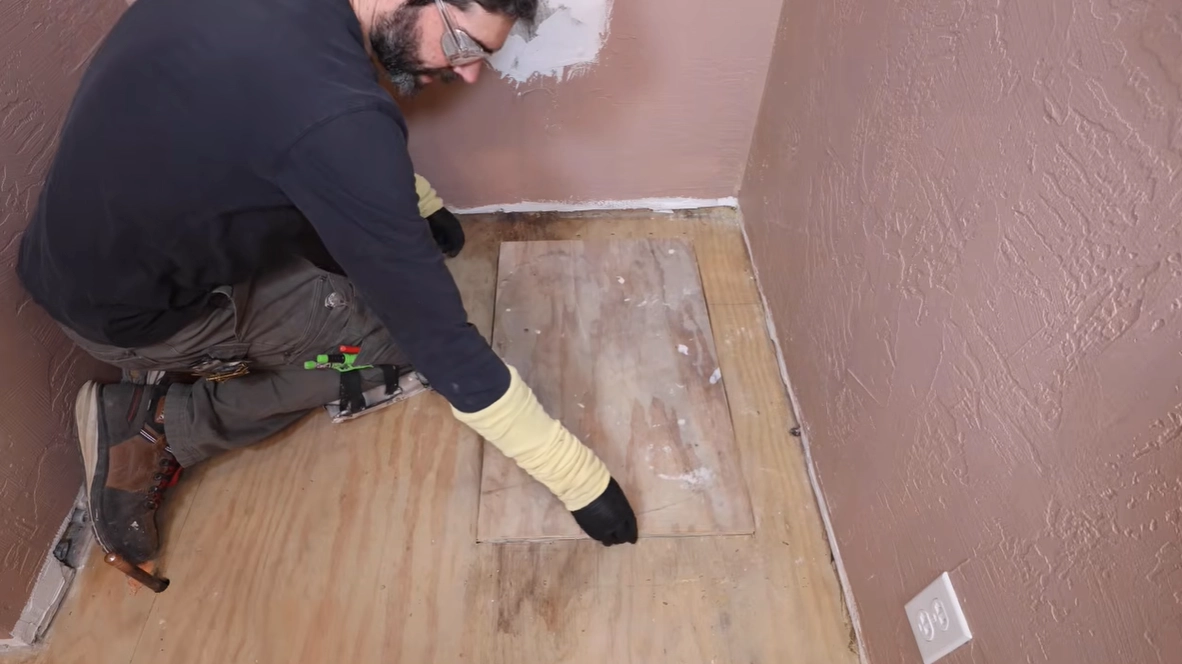
Subfloors and flooring. Water that reaches a subfloor leaves it swollen, delaminated, or mold-feeding — replacement is the only fix. The finish floor on top is its own decision: tile over a concrete slab often survives; original hardwood — common in Midtown, Cooper-Young, and Chickasaw Gardens homes — can cost more to restore properly than modern flooring costs to replace, which is exactly why saving it matters (specialized hardwood drying, when it works, preserves a floor that would cost a fortune to match). Carpet and pad in a flood zone come out; pad never dries reliably.
Trim, doors, and paint. Baseboards, door casings, and window trim wick water upward and usually get replaced at least to the flood-cut line. Paint goes on last, matched to the existing finish so the repaired area disappears into the room.
Bathroom and kitchen rebuilds. These rooms carry the heaviest reconstruction bills because everything is layered: failed supply lines and appliance leaks typically damage subfloor, backer board, tile, vanities, and plumbing fixtures in one event. A bathroom rebuild after water damage is effectively a small renovation — new subfloor, new cement board, re-tiled wet areas, reset or replaced fixtures — which is why the Quora question “how much is a good bathroom remodel, including replacing water damage drywall” gets asked so often. The honest answer: it depends on how many layers the water reached, and nobody can price it without seeing it.
Call (901) 286-9686 to request a reconstruction assessment — get a written scope of what your rebuild needs before anyone swings a hammer.
Why one point of contact changes everything
Here’s the failure pattern that shows up again and again: one company does the mitigation (extraction, drying, tear-out), a different contractor does the rebuild, and when something goes wrong — a wall that smells musty two months later, a floor that buckles — each one blames the other. The mitigation company says the rebuild was fine when they left. The rebuild contractor says the wall must not have been dry.
Coordinated service eliminates the finger-pointing. When the same service provider manages both phases, the handoff is internal: the drying is verified against moisture readings before reconstruction begins, and if a reading isn’t where it should be, the rebuild waits. There’s one scope of work, one set of documentation, one name on the estimate — and one party accountable if a problem surfaces later.
This matters more than most homeowners realize, because the mitigation-to-reconstruction handoff is where the scam pattern lives. Verbal estimates given during the panic phase have a documented history of becoming inflated invoices — a $1,000–$3,000 verbal figure that arrives as a $5,100 bill. A coordinated provider with a written, line-item scope for both phases makes that pattern nearly impossible: the numbers are on paper before work starts.
Learn the red flags before you sign anything
What does water damage repair cost in Memphis?
Separate the bill into its two parts, because they’re priced differently:
Mitigation (extraction, drying, cleaning, demolition of unsalvageable materials) is priced by water category and square footage. As national benchmarks (Angi 2026 data, labeled as national because no Memphis-specific pricing dataset exists): most homeowners pay $1,380–$6,370, averaging ~$3,860. Per-square-foot rates run roughly $3–$4/sq ft for Category 1 clean water, $4–$6.50/sq ft for Category 2 gray water, and $7–$7.50+/sq ft for Category 3 black water.
Reconstruction (drywall, insulation, flooring, trim, paint — the rebuild itself) is priced by materials and finishes. National benchmarks put it around $20–$37 per square foot, which is why a single rebuilt bathroom — subfloor, backer board, tile, fixtures — can cost more than the entire mitigation phase that preceded it.
Three Memphis-specific factors push reconstruction bills up: older housing stock (plaster and original hardwood cost more to restore than modern materials), finished basements and high-end finishes (more material to match), and delays (every 24 hours of standing water in 60–80% humidity converts dry-in-place work into tear-out work).
The only number that matters for your home is a written, line-item estimate built on an on-site assessment — which you should request before authorizing any work, from us or anyone.
See the full cost breakdown with real cost drivers
Insurance notes for your rebuild
A few things worth knowing before the rebuild starts, not after:
- Sudden events are typically covered; gradual damage usually isn’t. A burst supply line that floods your kitchen is the textbook covered claim. A shower pan that’s been leaking for eight months is the textbook denial. The rebuild documentation should reflect which one yours was.
- Mitigation and reconstruction may be estimated separately. Ask whether your estimate covers both phases or mitigation only — two quotes with different scopes aren’t comparable numbers.
- Your adjuster’s scope and your contractor’s scope should match. Estimates are commonly built in Xactimate, the pricing software most insurers use. Line items for drywall, insulation, flooring, and paint should read the same on both documents; mismatches are where disputes start.
- Ask about how the company works with your insurer — some providers document everything for your claim from the first visit. Get clarity on billing arrangements in writing before work begins.
Read the full Memphis insurance claims playbook · Burst pipe insurance notes
Water damage repair questions — straight answers
Can I put Kilz over the spots and repaint or do I need to replace the sheetrock?
If the drywall is fully dry, firm, and flat — just stained — a stain-blocking primer like Kilz and fresh paint is fine. If it’s soft, crumbly, sagging, or the stain keeps bleeding through, the paper face and gypsum are compromised: cut it out and replace it. In Memphis’s 60–80% humidity, painting over damp drywall traps moisture that feeds mold. Verify with a moisture meter before deciding.
My contractor says he will paint it and seal it… Shouldn’t the ceiling be changed?
If the ceiling drywall stayed dry and only shows surface staining, sealing and painting is legitimate. But if it’s sagging, soft, or was saturated — common after supply-line leaks — it should be replaced, because weakened gypsum can fail and trapped moisture breeds mold. Ask your contractor to probe it: firm and dry means paint; soft or saturated means replace. A refusal to check is the red flag, not the answer itself.
…do we tear out this wet sheetrock and insulation and replace?
Yes. Wet insulation — fiberglass or cellulose — loses its insulating value and stays damp inside the wall cavity, which is exactly how mold starts behind “fixed” walls. Professional practice is to remove wet insulation along with the soaked drywall, dry the cavity to verified moisture levels, then install new insulation and drywall. Rehanging drywall over damp insulation is the shortcut that causes callbacks.
…is the leak damage just on the drywall on ceiling? Or could it have potentially cause damage to any wood or anything structural in between?
It can absolutely reach further. Water that soaks a ceiling typically wets the insulation and can migrate to joists, subfloor above, and framing — wood stays damp long after drywall feels dry. That’s why professionals check framing with moisture meters before rebuilding: rebuilding over damp lumber traps moisture and invites rot and mold. The visible stain is the floor of the problem, not the ceiling of it.
How much is a good bathroom remodel, including replacing water damage drywall?
There’s no honest flat number. Using national benchmarks (Angi 2026, ~$3,860 average for restoration; reconstruction ~$20–$37/sq ft), a water-damaged bathroom rebuild — subfloor, backer board, tile, fixtures, damaged drywall — commonly lands in the mid four figures and up depending on finishes. The real figure comes from a written, line-item estimate. Request one before authorizing work: (901) 286-9686.
Rebuild it right the first time.
The cheapest rebuild is the one you do once. Get a written scope, verify the drying with real readings, and make sure one accountable provider owns the whole job — from tear-out to final coat of paint.
Call (901) 286-9686 to request help with your water damage repair in Memphis.
Memphis Water Damage Restoration · 4040 Delp St, Memphis, TN 38118 · Serving Shelby County & the Mid-South
Cost figures on this page are national benchmarks for planning, not Memphis quotes — your real number comes from a written on-site estimate.