
Eyebrow: THE MEMPHIS CLAIMS PLAYBOOK
Water Damage Insurance Claims in Memphis, TN: The Complete Playbook
Here’s the uncomfortable truth about water damage in Memphis: the restoration work is only half the battle. The other half is the insurance claim — and it’s where homeowners lose thousands without realizing it. They wait too long to document. They say the wrong thing to the adjuster. They sign paperwork they don’t understand. Or they assume “flooding” is covered when their policy specifically excludes it.
This guide fixes that. It covers what Memphis homeowners policies typically cover (and what they don’t), how to document damage so your claim survives scrutiny, what to say — and not say — to your adjuster, and the traps that turn valid claims into denials. It’s written for Shelby County homeowners dealing with burst pipes, appliance failures, storm intrusion, and the river-city flooding realities that make Memphis different.
One important note: insurance policies vary enormously. Everything below describes how these claims typically work — your policy’s declarations page and exclusions have the final word. When in doubt, read your policy before you need it, not after.
Does homeowners insurance cover water damage in Memphis?
Usually, yes — if the damage was sudden and accidental. That’s the phrase that decides most claims. A burst supply line at 2 a.m., a washing machine hose that let go, a water heater that ruptured, wind-driven rain that forced water through a storm-damaged roof — these are the events homeowners insurance is built for.
What’s typically not covered:
- Gradual damage. The slow leak under the kitchen sink you noticed six months ago and never fixed. Insurers call this a maintenance failure, and they deny it routinely. This is the single most common reason Memphis claims die.
- External flooding. Rising water from outside — the Mississippi River running high, Nonconnah Creek backing up into streets, flash-flood runoff pouring through your door. Standard homeowners policies exclude this. It requires separate NFIP flood insurance (more below).
- Groundwater seepage. Water wicking up through your basement floor or foundation walls. Also excluded from standard policies — a painful distinction in Midtown, where the high water table makes seepage a way of life.
- Sewer backup — unless you bought the endorsement. Many policies exclude sewer and drain backup by default, or cap it at a low sublimit. In Memphis’s older neighborhoods with aging sewer laterals, this endorsement is worth checking before you need it.
The Memphis wrinkle: this is a river city wedged between the Mississippi River, the Wolf River, Nonconnah Creek, and the Loosahatchie River. Tributary backwater — like the May 2011 event that flooded roughly 3,000 metro properties — reads as “flood” to an insurer even when your street never saw the Mississippi itself. Knowing whether your water came from inside (covered) or outside (excluded) is the first and most important thing to establish.
Not sure which category your damage falls into? Call (901) 286-9686 — restoration services are available across Memphis and Shelby County, and getting a professional assessment early protects both your home and your claim.
What flood insurance (NFIP) covers that homeowners doesn’t
The National Flood Insurance Program exists precisely because standard homeowners policies don’t cover flooding. In Memphis, this matters more than most inland cities admit:
- What it covers: structural damage from external flooding — rising river water, flash-flood runoff, storm surge-style events. The April 2025 flash floods that dumped 14+ inches on East Memphis are exactly the kind of event NFIP is for.
- What it doesn’t: it won’t cover the burst pipe or the appliance failure — that’s your homeowners policy’s job. The two policies are complements, not substitutes.
- Who needs it: anyone in a FEMA high-risk flood zone (Zones A, AE), especially near Nonconnah Creek borders and low-lying Downtown areas — and frankly, anyone who’s watched Memphis storm season (April through September) do its thing. You can check your zone on FEMA’s Map Service Center by address.
- The timing trap: NFIP policies typically carry a 30-day waiting period before coverage starts. You cannot buy it during a storm. If you’re reading this during dry weather, that’s the time.
How to check your FEMA flood zone
Is it worth claiming on home insurance?
This is one of the most-asked questions in America — “Is it worth claiming on home insurance?” — and the answer is math, not instinct.
Do the rough calculation: take the estimated restoration cost and subtract your deductible. If what’s left is small — a few hundred dollars — paying out of pocket usually beats putting a claim on your record. If the job is well above your deductible (think $2,500–$3,000+ over), claiming typically makes sense for sudden, covered events.
Three things Memphis homeowners get wrong here:
- They forget the deductible applies per event. Two separate leaks in one year can mean two deductibles.
- They don’t price the “claim on record” effect. A single water claim rarely spikes premiums dramatically, but multiple claims in a few years can — and can complicate renewals.
- They claim the $900 job and eat the $8,000 job. Save your claims history for the losses that actually hurt.
The documentation rule applies either way: photograph and document everything even if you decide not to claim. If hidden damage surfaces later (mold inside a wall cavity three months on), that documentation is what lets you reopen the conversation.
The 48-hour claim playbook: what to do, in order
When water is in your home, you’re not just mitigating damage — you’re building a claim file. Do these in order:
1. Make it safe, then stop the source. Electricity off in affected areas if you can do it safely. Water off at the main shutoff valve if it’s a plumbing failure. (Full sequence: what to do in the first 30 minutes)
2. Photograph and video everything before anything moves. Wide shots of each room, close-ups of damage, the source if visible (burst pipe, failed hose), water lines on walls, serial numbers on ruined appliances. Narrate video with dates and times.
3. Mitigate immediately — insurers require it. Your policy almost certainly includes a “duty to mitigate”: you must take reasonable steps to prevent further damage. Move valuables, start drying what you safely can, and get professional help fast. Delays get claims reduced or denied.
4. Call your insurer and open the claim. Report promptly — most policies require “prompt” notice. Stick to facts: what happened, when, what’s damaged. Don’t speculate about causes or coverage.
5. Get a professional assessment. A written, line-item assessment from a restoration professional does two jobs: it tells you what the damage actually is, and it gives your adjuster an independent scope to work from. Restoration services are available across the Mid-South — call (901) 286-9686 to request an assessment.
6. Meet the adjuster prepared. Have your photos, your documentation, and your professional assessment ready. Walk the damage with them. Ask questions. Take notes with names and dates.
7. Review the settlement before accepting. Compare the adjuster’s scope against your professional estimate. If line items are missing, ask for them specifically — adjusters can and do supplement claims when presented with documentation.
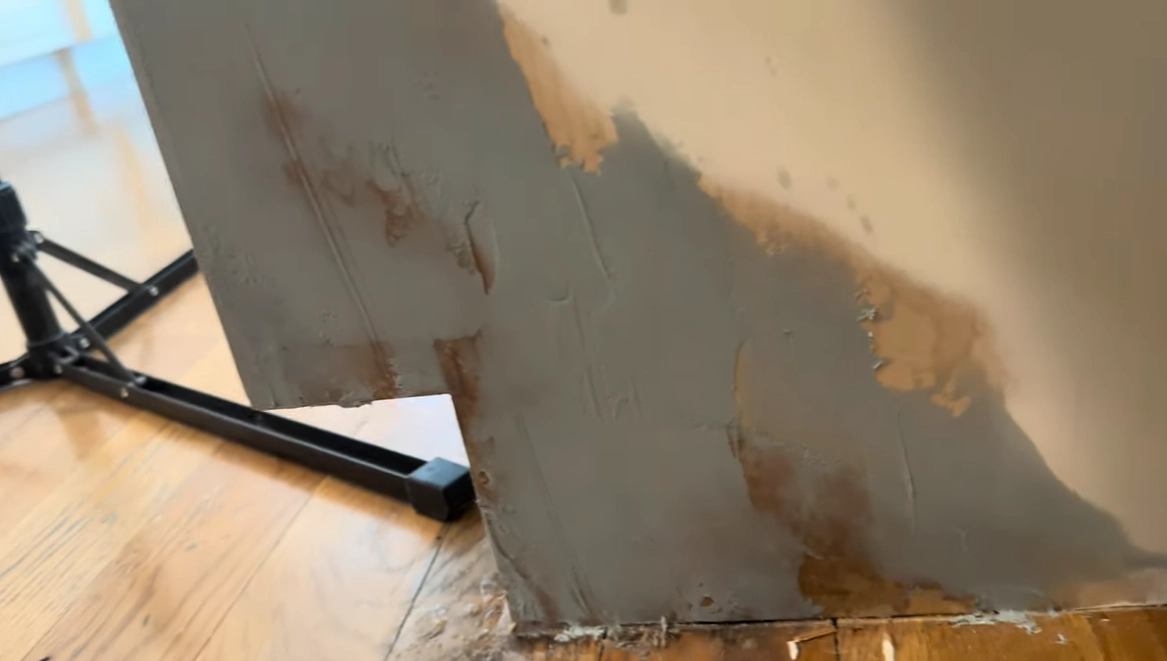
How to document water damage for your insurance claim
Adjusters pay for what they can see in the file. Build a file they can’t argue with:
| Document this | How | Why it matters |
|---|---|---|
| Every affected room | Wide photo + video walkthrough, narrated with date | Establishes scope |
| Water lines on walls/furniture | Close-up with a ruler or tape measure for scale | Proves depth and spread |
| The source | Photo of burst pipe, failed hose, roof damage | Proves “sudden and accidental” |
| Damaged contents | Individual photos; serial/model numbers | Contents coverage |
| Moisture readings | Professional moisture meter readings, if assessed | Proves hidden damage |
| All communications | Names, dates, what was said — insurer, adjuster, contractors | Your paper trail |
| Receipts | Emergency mitigation, hotel if displaced, supplies | Additional living expenses |
| Before photos | Any pre-loss photos of the rooms (phone camera roll counts) | Proves pre-loss condition |
Keep everything in one folder — digital and backed up. Claims get reopened months later when mold appears or a repair fails; the homeowners who win those fights are the ones who kept the file.
What to say when the adjuster calls: scripts that protect you
The adjuster’s job isn’t to deny you — it’s to determine what’s covered. Help them help you by being factual, consistent, and brief.
Do say:
– “On [date] at approximately [time], [what happened]. I discovered it at [time].”
– “I shut off the water/electricity and began mitigating immediately.”
– “Here’s my documentation — photos, video, and a professional assessment.”
– “Can you walk me through which line items are covered and which aren’t?”
Don’t say:
– “It’s been leaking for a while, I think.” (hands them “gradual damage” on a platter)
– “I think it’s covered, right?” (don’t ask them to decide your coverage out loud — read your policy)
– Anything absolute you’re not sure about. “I don’t know, but here’s what I documented” beats a guess every time.
Three questions worth asking your adjuster directly:
1. “Is there anything in my documentation that’s missing for a complete evaluation?”
2. “What’s the process if additional damage is discovered during demolition?” (it often is)
3. “What are my options if I disagree with the scope?” (every insurer has a supplement and appeal process — knowing it exists changes the dynamic)
“Can you claim plumbing repairs on insurance?”
Short answer: the water damage, usually yes; the pipe repair itself, usually no. This confuses almost everyone.
Homeowners insurance typically covers the damage the water caused — the soaked drywall, the ruined flooring, the mold remediation — when the cause was sudden and accidental. But the cost of fixing the failed pipe itself is generally considered maintenance, and policies routinely exclude it. So the plumber’s $300 pipe repair is on you; the $4,000 dry-out of everything the pipe soaked is the claim.
Same logic applies to appliances: the new water heater is yours to buy, but the damage its failure caused is typically claimable. And “are plumbing leaks covered by insurance?” — sudden burst, yes; slow seep you’ve ignored for months, no. The sudden-vs.-gradual line runs through everything.
“Do homeowners insurance cover mold remediation?”
It depends entirely on what caused the mold. If the mold resulted from a covered sudden event — a burst pipe you addressed promptly — remediation is typically covered as part of the claim. If it grew from a long-term leak, humidity, or flooding (excluded peril), the mold claim usually dies with the underlying cause.
Two Memphis-specific notes: with summer humidity at 60–80%, mold can start within 24 to 48 hours of water exposure — which is why fast mitigation isn’t just good practice, it’s claim protection. And because “mold” triggers coverage fights, documentation showing you acted quickly is your best defense against a denial framed as “long-term.”
Assignment of benefits: understand it before you sign it
After a loss, some contractors ask you to sign an assignment of benefits (AOB) — a document transferring your insurance claim rights to them, so they deal with (and get paid by) your insurer directly. It can be convenient. It can also be a trap:
- You’re handing a third party control of your claim — including the right to negotiate (or litigate) the amount.
- If the work disappoints, you’ve given away leverage that’s hard to get back.
- Some AOBs include clauses you wouldn’t agree to if you read them: arbitration waivers, inflated-rate provisions.
The rule: never sign an AOB under pressure, at 2 a.m., or without reading every line. A legitimate company will explain exactly what it says and give you time. If anyone tells you “insurance requires you to sign this,” that’s false — it doesn’t.
5 reasons water damage claims get denied in Memphis
- Gradual damage. The slow leak, the “it’s been damp down there for a while” basement. Maintenance exclusions are the #1 killer.
- Flood exclusion. External water — river backwater, flash-flood runoff, groundwater seepage — without NFIP coverage. In a river city, this one stings.
- Delayed mitigation. You waited a week to call anyone. The insurer argues the mold and secondary damage are your fault — and they’re often right contractually.
- No documentation. “Trust me, it was worse before I cleaned up” is not a claim file.
- The wrong peril blamed. Claiming a sewer backup under a policy that excludes it, or a foundation seepage issue as “storm damage.” Match the claim to the actual cause.
Denied doesn’t always mean over. Every insurer has an appeal and supplement process, and documented claims get reopened more often than you’d think. If you believe the denial is wrong, ask for the specific policy language cited and review it against your documentation.
Water damage insurance questions — straight answers
Will insurance pay for a flooded basement?
Usually not through standard homeowners insurance. Most policies cover sudden internal events like burst pipes but exclude external flooding and groundwater seepage — that requires separate NFIP flood insurance. In Memphis, with the Mississippi, Wolf River, and Nonconnah Creek nearby, knowing which policy covers what is critical. Document everything from day one.
Does homeowners insurance cover water damage from a burst pipe?
Typically yes — a burst pipe is the textbook “sudden and accidental” event. The resulting water damage (drywall, flooring, drying, mold remediation) is usually covered; the pipe repair itself usually isn’t. Fast mitigation matters: a burst pipe addressed in hours is a clean claim; one left running for days invites coverage fights.
Are plumbing leaks covered by insurance?
Sudden plumbing failures generally are; slow, long-term leaks generally aren’t. The distinction is sudden vs. gradual — a supply line that burst overnight is covered; a drain connection that’s seeped for a year is a maintenance issue. When in doubt, the deciding evidence is usually documentation of when it started.
Can my insurer cover the expense of water damage restoration?
If the cause was a covered peril, yes — professional water extraction, structural drying, mold remediation, and reconstruction are all standard claim components. Most insurers build estimates in Xactimate, the industry pricing software, so a professional line-item estimate in the same format speaks your adjuster’s language.
Is it worth claiming on home insurance?
Do the math: restoration cost minus your deductible. If the remainder is substantial (typically $2,500–$3,000+ over the deductible), claiming usually makes sense for sudden events. Below that, paying out of pocket often beats a claim on your record. Document everything regardless.
Has anyone used a water damage restoration company to help with an insurance claim?
Yes — it’s common, and a good one earns its keep: professional documentation (photos, moisture readings, line-item estimates), adjuster-ready scopes, and someone who understands Xactimate line items. Just vet carefully: get everything in writing, never sign an assignment of benefits under pressure, and keep copies of every document. How to vet a company
Build your claim file before you need it.
The homeowners who get paid fairly aren’t luckier — they’re documented. Photograph your home’s vulnerable spots today (under sinks, around the water heater, the basement), know where your shutoff valves are, and keep this playbook bookmarked. And if water is in your home right now, start the documentation this minute — then get professional help.
Call (901) 286-9686 — start with a professional assessment
Memphis Water Damage Restoration · 4040 Delp St, Memphis, TN 38118 · Serving Shelby County & the Mid-South
General information only — not legal or insurance advice. Policy language varies; review your own policy and consult a licensed professional for your specific situation.