Sewage Backup Cleanup in Memphis, TN
The basement toilet is gurgling. Standing water in the shower drain. The smell tells you everything. A sewage backup is the one water emergency where the wrong first move — wading in, mopping up, dousing it with bleach — can harm your health and your insurance claim.
Sewage isn’t just dirty water. Under the industry’s water classification standard, it’s Category 3 black water: water containing pathogens — bacteria, viruses, parasites — at levels that make every porous material it touches unsalvageable. This page explains what a sewage backup is, why it happens in Memphis, what professional cleanup involves, what it costs (honest national benchmarks), and who pays when it’s a rental.
Sewage backup cleanup services are available across Memphis and Shelby County. Call (901) 286-9686 to request service — and do not enter standing sewage water while you wait.
What a sewage backup really is: the Category 3 explainer
The restoration industry classifies water by contamination level, and the category decides everything: safety protocols, what materials can be saved, and cost per square foot.
| Category 1 — Clean water | Category 2 — Gray water | Category 3 — Black water | |
|---|---|---|---|
| Sources | Burst supply lines, overflowing sinks, tub overflows | Washing machine/dishwasher overflow, toilet overflow without solids, sump pump failure | Sewage backup, toilet overflow with solids, rising floodwater, storm runoff |
| Contamination | Negligible at the source | Significant — bacteria, chemicals | Grossly contaminated — pathogens, bacteria, viruses, parasites |
| What pros must do | Extract and dry; most materials saved | Antimicrobial treatment; some porous materials removed | Full protective equipment, containment, all porous materials removed and discarded |
| National cost benchmark | ~$3–$4/sq ft | ~$4–$6.50/sq ft | ~$7–$7.50+/sq ft |
Two things that surprise homeowners:
First, the category can escalate. Clean water that sits — especially water contacting soil or floor drains — gets reclassified upward. A Category 1 leak across a garage floor drain can be rerated Category 2 or 3.
Second, “it looks clean now” means nothing. Pathogens don’t announce themselves. Mopped-and-bleached sewage can still harbor bacteria inside drywall, under baseboards, and in subflooring. Category 3 protocol doesn’t trust appearances — every porous material the water touched comes out, no exceptions. That’s not upselling; it’s the standard.
Why sewage backups happen in Memphis
In Memphis, several causes stack:
Aging sewer infrastructure. In older neighborhoods — parts of Frayser, South Memphis, North Memphis, and older Midtown — aging clay and cast-iron laterals crack, joints separate, and grease narrows the flow. When heavy rain arrives, inflow overwhelms marginal lines, and water finds the lowest drain — usually a basement floor drain or first-floor shower.
Heavy-rain inflow. Memphis averages about 55 inches of rain a year, most of it in violent bursts — the April 2025 flash floods dropped 14+ inches on East Memphis. In areas with older infrastructure, stormwater entering the sanitary system has to go somewhere — sometimes your basement.
Root intrusion. Mature trees are an East Memphis signature — and a sewer lateral’s worst enemy. Roots enter through tiny cracks and joints, growing into mats that catch everything flowing past. A line that drains fine in February can back up completely by August.
Blockages, misuse, and pump failures. “Flushable” wipes, grease, and feminine products are the big three household contributors — in multi-unit buildings, one tenant’s habits become everyone’s backup. And homes with below-grade bathrooms rely on sewage ejector pumps; when one fails during a storm power outage, wastewater goes up through the lowest fixture.
The pattern: backups during heavy rain point to system-capacity problems; backups in dry weather point to a blockage in your lateral. Either way, cleanup follows the same Category 3 standard. See our basement & crawlspace water damage guide.
Backing up right now? Stop using water, don’t flush, keep everyone out of the area, and call (901) 286-9686.
The professional sewage cleanup process: Category 3 protocol
What follows is the professional Category 3 standard — described so you can tell a legitimate job from a shortcut.
1. Safety assessment and protective equipment. The area is assessed for electrical hazards, structural risks, and contamination extent. Professional crews work in full protective equipment — respirators, suits, gloves, boots, eye protection. Aerosolized sewage during extraction is a genuine exposure route — a crew arriving in street clothes should be sent away.
2. Source control and extraction. The source is stopped — water use halted, a plumber engaged for the line repair. Standing black water is extracted with professional equipment, contained, and disposed of properly.
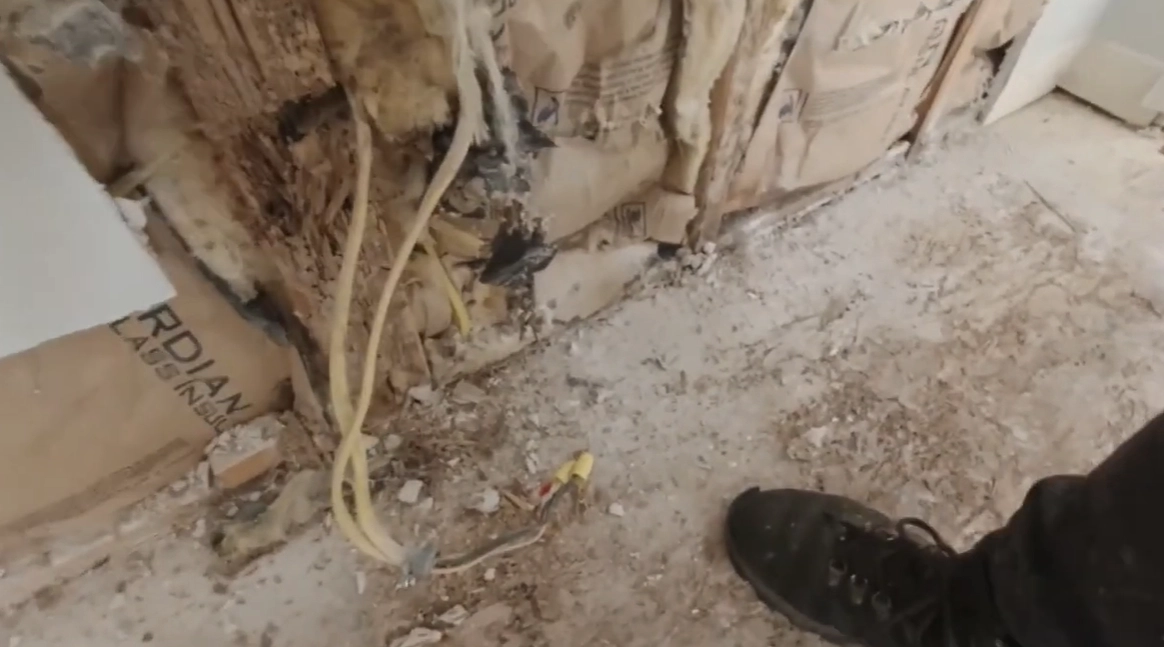
3. Removal of contaminated porous materials. Drywall, insulation, carpet and pad, baseboards — every porous material the sewage touched is cut out and discarded with a margin beyond the visible line, since wicking carries contaminants further than the eye sees.
4. Cleaning, disinfection, and sanitizing. Remaining structural surfaces — framing, subfloors, concrete — are cleaned and treated with professional-grade disinfectants at proper dwell times: the contact time needed to actually kill pathogens.
5. Structural drying. After sanitizing, the area is dried with professional air movement and dehumidification, verified with moisture meters — because in Memphis’s 60–80% summer humidity, residual moisture becomes a mold event within 24 to 48 hours.
6. Odor control and verification. Professional deodorization addresses what disinfection leaves behind, and the job ends with verification that contamination is removed and moisture is normal — documentation your insurance claim needs.
7. Reconstruction. Removed drywall, flooring, and trim are rebuilt to pre-loss condition — a separate phase from the mitigation above, and usually a separate portion of the bill.
The throughline: extraction, removal, disinfection, disposal, drying, documentation. Anything missing a step is incomplete. If water needs removing urgently, emergency water removal is the starting point.
Why bleach isn’t enough: the question everyone asks
“Can you use bleach to clean up a sewer backup?” is one of the most-asked questions about this topic — and the honest answer has two parts.
What bleach can do: On hard, non-porous surfaces — sealed concrete, glazed tile — diluted bleach with proper dwell time is an effective disinfectant, and a reasonable first response for a tiny, contained spill.
Why it fails as a cleanup strategy: Bleach can’t penetrate porous materials — it disinfects the surface of drywall while bacteria survive inside it. It doesn’t remove materials protocol requires be discarded, loses effectiveness against heavy organic matter (exactly what sewage is), and does nothing about contamination wicked into wall cavities and subflooring.
The deeper problem: bleach smells like “clean,” which convinces people the job is done. With Category 3 water, odor control is not decontamination. Beyond a minor spill on a sealed, non-porous surface, professional cleanup is the safe answer — and the one your insurer expects documented.
What sewage backup cleanup costs: honest benchmarks
Category 3 is the most expensive water category: protective equipment, containment, mandatory material disposal, disinfection, and usually significant reconstruction.
National benchmarks (not Memphis quotes): Category 3 extraction, cleanup, and drying benchmarks at roughly $7–$7.50+ per square foot nationally. A 500-square-foot basement with a sewage backup benchmarks around $3,500–$10,000+ for mitigation alone — plus reconstruction at roughly $20–$37 per square foot, depending on finishes. Angi’s 2026 data (1,500 verified projects) puts overall water damage restoration at ~$3,860 nationally, with most jobs between $1,380 and $6,370 — sewage jobs with reconstruction land well above that.
What drives your number up or down:
- Square footage and depth — how far the sewage spread and how long it sat
- Finished vs. unfinished space — a finished basement with drywall and carpet costs far more than an unfinished one: more material must be removed and rebuilt
- HVAC involvement — if contamination reached ductwork, costs rise significantly
- Contents — contaminated belongings, furniture, and stored items add cleaning or disposal costs
- Reconstruction scope — mitigation and rebuild are often separate line items; always ask which a quote covers
The estimate rule: get it in writing, line-itemized, before authorizing work — mitigation separated from reconstruction, materials listed, products named. The documented pattern of verbal estimates becoming surprise invoices is exactly what written scopes prevent. Full breakdown in the honest cost guide.
Your real number comes from an on-site assessment. Call (901) 286-9686 to request one.
Insurance and sewage backups: who pays, including renters
Homeowners: check for the sewer backup endorsement. Standard policies typically cover sudden water damage like burst pipes — but sewage backup from outside the home is frequently excluded without a water backup / sump overflow endorsement. It’s usually an inexpensive rider — one of the highest-value endorsements you can carry in Memphis. Without it, you’re likely paying out of pocket.
What helps a claim: documentation from minute one, immediate mitigation (insurers penalize delay), and professional Category 3 cleanup with written scope and invoices. DIY cleanup followed by a claim for professional-level costs is a common denial trigger.
Renters: notify your landlord immediately, in writing. Landlords are generally responsible for plumbing systems and uninhabitable conditions — a sewage backup qualifies. Your renter’s insurance covers your belongings, not the building. Document everything, keep receipts, and don’t clean Category 3 contamination yourself. Full breakdown in our landlord & renter water damage guide.
Landlords: a backup in a rental is a habitability and liability issue. Fast professional remediation with documentation protects you on both — even in “neither party is at fault” scenarios. See the landlords guide for the playbook.
Full claims strategy is in our water damage insurance claims guide. Questions about your situation? Call (901) 286-9686.
Your first 60 minutes after a sewage backup: the safety checklist
- Don’t touch the water. Keep children, pets, and everyone out of the affected area. Assume all backup water is Category 3.
- Respect the electricity. Never step into standing water near outlets, appliances, or the breaker panel. If you can safely reach the panel without entering the water, shut off power to the area.
- Stop adding to it. Don’t flush toilets, run faucets, or use the washing machine — every gallon you send down may come back up.
- Document everything. Photograph and video the backup from a safe distance before anything is moved. Your insurer needs the original extent — and document contaminated items before disposal.
- Call a professional. Category 3 cleanup requires the protocol above — extraction, removal, disinfection, disposal, drying. Call (901) 286-9686 to request sewage backup cleanup.
- Keep every receipt. Emergency plumbing, hotel stays, replaced belongings — all of it may matter for your claim.
What not to do: don’t mop it and move on, don’t assume bleach finished the job, don’t run your HVAC — and don’t wait. In Memphis humidity, waiting converts a sewage job into a sewage-plus-mold job within 48 hours.
Sewage backup questions — straight answers
Who cleans up a sewage backup?
Professionals — always. Sewage is Category 3 black water carrying bacteria, viruses, and parasites that household cleaners can’t reliably neutralize in porous materials. Professional cleanup means extraction, removal of contaminated porous materials, disinfection, and safe disposal — with written documentation your insurer will accept.
Can you use bleach to clean up a sewer backup?
Bleach disinfects hard, non-porous surfaces like sealed tile, but it can’t penetrate drywall, subfloors, or insulation — and it doesn’t remove materials Category 3 protocol requires be discarded. It also loses effectiveness against heavy organic matter. For anything beyond a tiny spill on sealed surfaces, professional cleanup is the safe standard.
What is the best way to clean up a sewer backup?
Stop the source: don’t flush or run water. Protect yourself — gloves, boots, ideally a respirator. Photograph everything for insurance before anything moves. Then call a professional: extraction, removal of porous materials the sewage touched, disinfection, drying, and safe disposal. DIY cleanup risks your health and your claim.
How should I clean up my basement after a sewer backup?
Don’t wade in. Shut off power only if you can reach the panel without entering the water. Keep everyone away from the water. Photograph everything for your insurer from a safe distance, then call a professional for Category 3 cleanup and keep every receipt — contamination hides in porous materials.
Is it safe to live in a house with a flooded basement?
Usually not until it’s been professionally dried and sanitized. Floodwater — especially storm runoff or sewage (Categories 2–3) — carries contaminants; standing water near electrical systems is a shock hazard; and Memphis’s 60–80% summer humidity means mold can begin within 24 to 48 hours. Get a professional moisture assessment before deciding to stay.
Prevention: keeping the next backup out of your basement
No prevention is perfect against a municipal surcharge, but these cut your odds:
- Install a backwater valve. A backwater (check) valve on your sewer lateral lets wastewater flow out but slams shut when flow reverses. For homes in areas with older infrastructure — including parts of Frayser, South Memphis, and North Memphis — it’s the single highest-value protection; have a licensed plumber assess your lateral.
- Maintain your lateral. Periodic camera inspection and cleaning catches root intrusion and buildup before they become a backup — especially under mature trees.
- Battery backup for sump and ejector pumps. Storms that cause backups also cause outages — a pump that dies with the grid is decoration.
- Watch what goes down. No “flushable” wipes, no grease down the kitchen drain, minimal feminine products — the big three household contributors to blockages.
- Know your cleanout location. If a plumber needs emergency access to your lateral at 11 p.m., knowing where the cleanout is saves critical time.
- Add the endorsement. If your homeowners policy lacks a water/sewer backup rider, ask your agent about it — it’s typically inexpensive relative to a $10,000+ Category 3 loss.
Sewage doesn’t get better with time. Get it handled right.
A sewage backup is the emergency where the shortcut costs the most: health, home, and claim all depend on Category 3 protocol being followed completely. Half a job leaves contamination you’ll pay for twice.
Call (901) 286-9686 now to request professional sewage backup cleanup in Memphis.
Memphis Water Damage Restoration · 4040 Delp St, Memphis, TN 38118 · Serving Memphis & Shelby County