
Storm & Flood Damage Restoration in Memphis, TN
Memphis doesn’t get one kind of flood. In April 2025, flash flooding dropped 14+ inches on East Memphis in a matter of days — streets became streams, and basements filled in hours. In May 2011, it was the Mississippi River running high for weeks, pushing tributary backwater up the Wolf River, Nonconnah Creek, and the Loosahatchie until roughly 3,000 properties across the metro took on water. Different floods. Different damage. Different fixes.
When stormwater gets into your home — through the roof, under the door, up through the floor — the clock starts immediately. In Memphis’s 60–80% summer humidity, mold can take hold within 24 to 48 hours, and floodwater is never clean water. Services are available across Memphis and Shelby County — call (901) 286-9686 to request emergency water removal or flood damage restoration.
Flash floods vs. river floods: Memphis gets both
Which kind of flood hit you changes the contamination level, the drying strategy, and the insurance conversation — and Memphis sits in the path of both.
| Flash flooding | River flooding | |
|---|---|---|
| What triggers it | Intense spring and summer downpours overwhelming streets and drainage | The Mississippi River running high for days or weeks, pushing backwater up tributaries |
| Warning time | Minutes to hours — it happens during the storm | Days — river gauges give advance notice |
| Recent Memphis example | April 2025: 14+ inches on East Memphis in days | May 2011: roughly 3,000 properties flooded, much of it tributary backwater |
| Where it hits | Low-lying streets and neighborhoods — Downtown’s low-lying areas are especially prone; anywhere the drainage system gets overwhelmed | River-adjacent and creek-adjacent areas — Harbor Town and Mud Island near the Mississippi; neighborhoods bordering Nonconnah Creek, the Wolf River, and the Loosahatchie |
| The water itself | Contaminated runoff — street water, overwhelmed sewers, soil and debris | River and backwater — treated as contaminated; everything it touches is handled under black-water protocols |
| After the water recedes | Fast extraction and drying, usually days | Longer saturation — building materials soaked for days or weeks often can’t be dried and must be removed |
Storm season runs late spring through early fall, peaking April through September. Memphis averages about 55 inches of rain a year across roughly 112 precipitation days — and the heaviest of it arrives in the violent bursts that cause flash flooding.
For the full timeline, see Memphis flood history. For which waterways threaten your neighborhood, see flood zones and waterways.
How stormwater gets into Memphis homes
Flood damage isn’t always water rising through the floor. Storms attack a house from every direction, and each entry point creates a different restoration problem:
Roof leaks and wind-driven rain. Storm winds push rain sideways under shingles and through the smallest flashing failures — and water entering at the roof travels down through wall cavities, often surfacing rooms away from the leak. Sagging ceilings, peeling paint, and water stains after a storm are the classic signs.
Overwhelmed gutters and downspouts. Clogged gutters overflow at the foundation line, dumping roof-loads of water exactly where hydrostatic pressure does its worst. Downspouts that discharge at the corner of the house might as well be aimed at the basement.
Foundation seepage and hydrostatic pressure. Saturated soil presses groundwater against basement walls and up through floor cracks. This is the slow flood — it doesn’t look dramatic, but it soaks finished basements from below, and in Midtown’s high-water-table neighborhoods it can happen in any heavy rain.
Sewer backwater. When municipal systems are overwhelmed by stormwater, sewage can back up through floor drains and lower-level plumbing. This is Category 3 black water — the most contaminated classification — and it changes the entire restoration protocol. If stormwater in your basement smells like sewage or came up through a drain, treat it as contaminated and stay out of it.
Window and door intrusion. Driving rain finds failed seals, and ground-level doors in low-lying areas take on sheet flow during flash floods.
One rule governs all of it: floodwater is never treated as clean water. Professional standards classify external flooding — storm runoff, river water, rising groundwater — as contaminated (Category 2 or 3), which means porous materials it touched get removed and the space gets disinfected. That’s not upselling; it’s the protocol.
Stormwater in your home now? Call (901) 286-9686 to request emergency water removal services.
The restoration process after a flood
Flood restoration follows the same professional standard as other water damage, with extra weight on safety and contamination. Here’s the sequence, so you know what a thorough job looks like:
1. Safety first. Flooded homes are assessed for electrical hazards, structural damage, and contamination before anyone starts working. If water reached outlets, the breaker panel, or the HVAC, the power stays off until it’s cleared. Gas appliances that were submerged need professional inspection before being restarted.
2. Documentation for insurance. Everything is photographed and recorded before it’s moved or removed — the water line on the walls, the affected rooms, damaged contents. This documentation is what your adjuster works from, and it can’t be recreated after cleanup. (More on the claims process below.)
3. Water extraction. Standing water is removed with high-capacity pumps and extractors. In a flash-flood basement, this can take hours; in a river-flood home saturated for days, extraction is just the beginning.
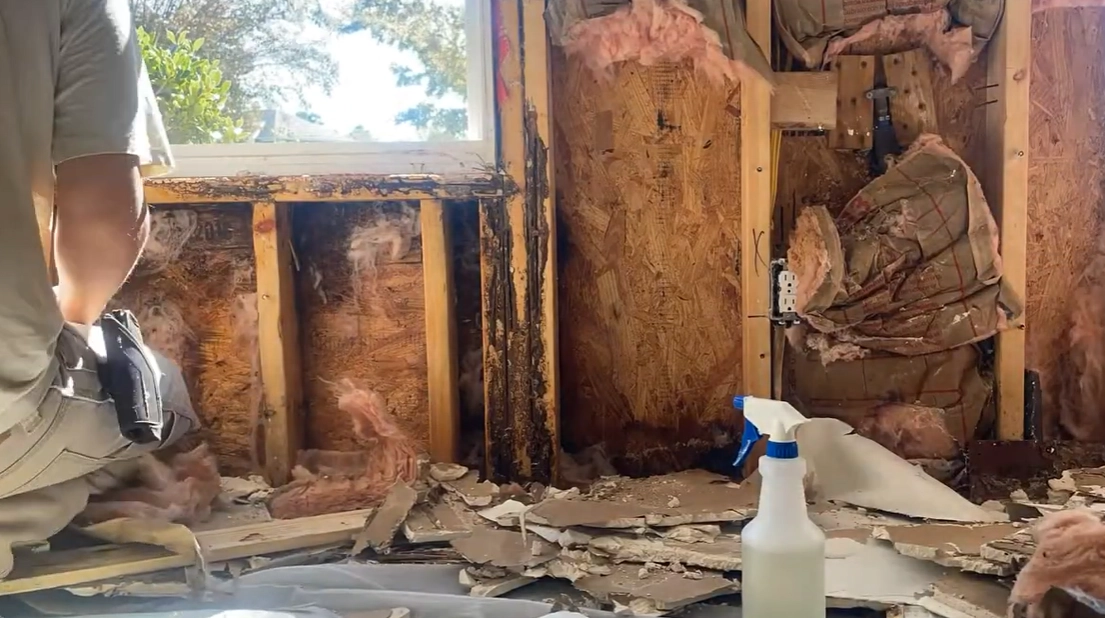
4. Removal of unsalvageable materials. Drywall, carpet, carpet pad, and insulation below the flood line that sat in Category 3 water come out — typically cut 12 to 24 inches above the visible water line, because water wicks upward inside the wall. Hardwood submerged for days usually can’t be saved; hardwood caught fast sometimes can. The call is made with moisture meters, not optimism.
5. Structural drying and dehumidification. What remains — framing, subfloors, concrete, masonry — is dried with industrial air movers and dehumidifiers, verified with moisture meters and drying logs: done when the readings say so. In a Memphis summer, drying against 60–80% outdoor humidity takes real equipment and real time.
6. Cleaning, sanitizing, and odor control. Floodwater leaves contamination and odor behind. Category-aware cleaning means antimicrobial treatment and disinfection for everything the water touched, plus odor control so the house doesn’t smell like the flood forever.
7. Reconstruction. Drywall, flooring, trim, paint — back to pre-loss condition. Mitigation and reconstruction are often separate phases with separate pricing; always confirm which one an estimate covers.
This describes the professional standard generally — the scope of your job depends on an on-site assessment. Call (901) 286-9686 to request one.
What does flood damage restoration cost?
Start with the honesty label: there is no published Memphis-specific price dataset, so these are national benchmarks for planning — your real number comes from a written, on-site assessment.
Nationally, homeowners pay an average of about $3,860 for water damage restoration, with most jobs landing between $1,380 and $6,370 (Angi, 2026 data). Flood damage runs higher than average, because floodwater is classified as contaminated: Category 3 work runs roughly $7–$7.50+ per square foot, since every porous material below the water line must be removed and the space disinfected — there’s no “dry it in place” option for sewage or river water. Multi-room storm flooding commonly benchmarks at $10,000–$15,000 or more, and major events run higher. Reconstruction adds roughly $20–$37 per square foot depending on finishes.
What drives a flood bill: how long the water sat, how many rooms and what materials were affected, whether it’s Category 2 runoff or Category 3 black water, and how fast mitigation started — every 24 hours of standing water adds secondary damage on top of the flood damage.
One protection worth repeating: never sign a work order on a verbal estimate. Real disputes have started exactly that way — a “$1,000 to $3,000” verbal figure becoming a $5,100 invoice. Insist on a written, line-item estimate before authorizing work, from any company.
For cost by water category, what inflates bills, and how to read an estimate — see our water damage cost guide. To request a written assessment, call (901) 286-9686.
Flood insurance vs. homeowners insurance: the distinction that decides your claim
This is the most expensive misunderstanding in Memphis flood restoration. Standard homeowners insurance and flood insurance cover different water — and in a river city, the gap between them is where claims die.
| Standard homeowners insurance | NFIP flood insurance | |
|---|---|---|
| Burst pipe, appliance failure, water heater leak | Typically covered — sudden and accidental internal events are what the policy is built for | Not covered — this isn’t flooding |
| Storm-driven rain entering through wind-damaged roof | Typically covered as storm damage | Not the primary coverage — this is a homeowners claim |
| External flooding — river water, flash-flood runoff, rising water entering the home | Excluded. This is the flood exclusion, and it surprises people | Covered. This is exactly what NFIP policies exist for |
| Groundwater seepage through the foundation | Excluded as flooding/groundwater | Generally limited — seepage alone is often not covered either |
| Sewer backup | Usually excluded unless you carry a specific endorsement | Not covered |
Three takeaways: first, if your basement flooded in the April 2025 storms or from creek backwater, your standard homeowners policy very likely doesn’t cover it — only a separate NFIP flood policy does. Second, “is it worth claiming” is deductible math: a $6,000 loss against a $1,000–$2,500 deductible usually justifies a claim; a $1,500 loss usually doesn’t. Third, documentation decides everything — photograph the water line and every affected room before anything moves.
Gradual damage is the other denial trigger: a seep or leak you’ve known about for months is typically excluded even when the source would otherwise be covered. Floods don’t give you that problem — but the slow foundation seep you’ve been ignoring does.
For the complete playbook — sudden vs. gradual, adjuster scripts, photo checklists, and assignment-of-benefits warnings — read our insurance claims guide.
Getting your Memphis home storm-ready
You can’t stop the rain, but you can decide where it goes. The pre-season checklist for the April–September storm window:
- Clean gutters and extend downspouts so roof water discharges well away from the foundation — not at the basement corner.
- Grade soil away from the foundation, especially on clay-heavy lots. Standing water against the wall becomes hydrostatic pressure against the wall.
- Test your sump pump before storm season — pour water in the pit, watch it pump, confirm the battery backup holds a charge.
- Check your flood zone. FEMA flood maps are searchable by address — know whether you’re in a flood-insurance zone before the water comes. Our flood zones and waterways guide covers which Memphis waterways threaten which neighborhoods.
- Consider flood insurance if you’re near Nonconnah Creek, the Wolf River, the Loosahatchie, or the Mississippi — or anywhere that’s flooded before. NFIP policies typically have a 30-day waiting period, so this is a before decision, not a during one.
- Inspect the roof — flashing, seals, and shingle condition. Storm-driven rain exploits the weaknesses normal rain doesn’t.
- Ask about a backwater valve if your street has combined sewers; it stops municipal backup from entering through your floor drains.
- Know your shutoffs and keep valuables elevated in basements and ground floors — water heaters, washers, and storage on pallets or shelves, not on the slab.
For the full seasonal program — spring storm prep, winter freeze prep, and the leak-detector lesson — see how to prevent water damage.
Storm & flood questions — straight answers
Each question below is an H2 with a precise answer. These are the verbatim questions homeowners actually ask.
Will insurance pay for a flooded basement?
Usually not through standard homeowners insurance. Most policies cover sudden internal events like burst pipes but exclude external flooding and groundwater seepage — that requires separate NFIP flood insurance. In a river city like Memphis, with the Mississippi, Wolf River, and Nonconnah Creek nearby, knowing which policy covers what is critical. Document everything from day one: photograph the water line and every affected room before anything is moved.
What is the most common cause of water damage in houses?
Plumbing failures top the list — burst or frozen pipes, failed supply lines, and appliance overflows cause more residential water damage than any other single source. In Memphis, storm-driven intrusion runs a close second during the April–September storm season, and the area’s older housing stock (median build year 1979) means aging pipes and roofs are a constant background risk. Insurers draw a hard line between sudden events (usually covered) and gradual leaks (usually not).
How long does emergency water removal take?
Extraction itself often takes hours, not days — depending on water volume and access. But extraction is only phase one: structural drying typically takes 3 to 5 days with professional equipment, verified with moisture meters and drying logs. Contaminated floodwater adds removal and sanitizing time before drying starts. Call (901) 286-9686 to request emergency water removal services.
What should I do if my basement is flooding?
Don’t enter water that may have contacted electricity — if in doubt, stay out and cut power to the area only if you can do so safely. Photograph everything for insurance before moving anything. Then call (901) 286-9686 to request emergency water removal services. Don’t wait for stormwater to dry on its own, and don’t assume it’s clean — treat all floodwater as contaminated until a professional assesses it.
How do I stop my basement from flooding in heavy rain?
Grade soil away from your foundation, keep gutters clean with downspouts extended away from the house, and maintain a sump pump with battery backup — tested before the April–September storm season. If your area has combined sewers, ask about a backwater valve. Check FEMA flood maps for your address to understand your zone, and if you’re near Nonconnah Creek or another waterway, look into NFIP flood insurance before the next storm — policies typically have a waiting period.
Storm damage in Memphis can’t wait — and neither should you.
Flash floods give you hours. River floods give you days of warning and weeks of damage. Either way, the water doesn’t dry on its own inside walls and subfloors — and the mold clock runs 24 to 48 hours in Memphis humidity. Services are available across Memphis, East Memphis, Downtown, Bartlett, Germantown, and the surrounding Mid-South.
Call (901) 286-9686 to request help
Memphis Water Damage Restoration · 4040 Delp St, Memphis, TN 38118 · Serving Shelby County & the Mid-South