Burst Pipe Repair & Cleanup in Memphis, TN
The call always comes the same way: the middle of a freeze, the middle of the night. You hear water where water shouldn’t be — a supply line has let go behind a wall, above a ceiling, or under a crawlspace, and by the time you find it, it’s been running for hours.
Here’s what most Memphis homeowners learn in that moment: a burst pipe is actually two separate problems. There’s the plumbing repair — a plumber’s job — and there’s the water damage — extraction, drying, and rebuilding everything the water touched, which is usually the larger bill. This page covers both, explains who does what, and what to do in what order.
Burst pipe cleanup services are available across Memphis, Shelby County, and the surrounding Mid-South. Call (901) 286-9686 to request help — the fastest money you’ll ever save is the water you stop in the first minutes.
Why Memphis pipes burst
It doesn’t take a polar vortex. Memphis plumbing fails when temperatures stay below freezing long enough for water to freeze and expand inside a pipe — and the Mid-South gets there most winters.
Two freezes are still burned into local memory: February 2021, when a deep freeze burst pipes across the metro in a single night, and January 2024, which did it again. But burst pipes aren’t only a historic-event problem. Every winter, supply lines in attics, crawlspaces, and exterior walls — the pipes with the least insulation and the most cold exposure — split open somewhere in the Mid-South.
The vulnerable spots in a typical Memphis home follow a pattern: older housing stock (much of the city was built around 1979, before modern freeze-protection standards), copper and CPVC supply lines running through unconditioned attics and crawlspaces, and exterior-wall pipes that freeze when the wind finds them. Add a power outage or a homeowner away for a weekend with the heat turned low, and you get the classic scenario: the pipe bursts at 2 a.m. and runs until someone notices.
First: shut off your water
Everything else can wait. This can’t. A supply line under normal household pressure can push out gallons a minute — every minute of flow is more drywall, more insulation, more flooring on the restoration bill.
Find your main water shutoff valve before winter. In many Memphis homes, the water meter sits near the curb or street, and the interior main shutoff is nearby — often in a utility room, laundry room, garage, or crawlspace entrance. It varies by house, which is exactly why you should locate yours on a dry Tuesday afternoon, not at midnight with water coming through the ceiling. Turn it a quarter-turn and make sure it actually closes; old gate valves seize up after years of sitting open.
If you can’t find or turn your main valve, Memphis Light, Gas and Water (MLGW) publishes winterization guidance each season — their standing advice for freeze events includes knowing your shutoff location, letting faucets drip during hard freezes, and opening cabinet doors to let warm air reach pipes on exterior walls.
Two bills, two trades: plumber vs. restoration
A burst pipe creates two distinct jobs, done by two distinct trades. Knowing which is which saves you from hiring the wrong one first — or paying one to do the other’s job badly.
| Plumber | Water damage restoration | |
|---|---|---|
| Fixes | The pipe itself — repair or replace the burst section, pressure-test the system | Everything the water touched — extraction, drying, sanitizing, rebuild |
| Typical bill | The smaller bill — often a few hundred dollars for the pipe repair | Usually the larger bill — depends on how long the water ran and how far it spread |
| When they work | First, or as soon as the water is stopped | After (or alongside) — drying can’t finish while water is still flowing |
| What to ask | “Can you pressure-test the whole system?” — a freeze that burst one pipe may have stressed others | “Will you give me a written, line-item estimate separating mitigation from reconstruction?” |
The order matters: stop the water, fix the pipe, then dry and rebuild. A restoration crew working under an unrepaired leak is drying a bathtub with the faucet running. Legitimate restoration work coordinates with your plumber rather than competing with them.
Call (901) 286-9686 to request burst pipe cleanup help
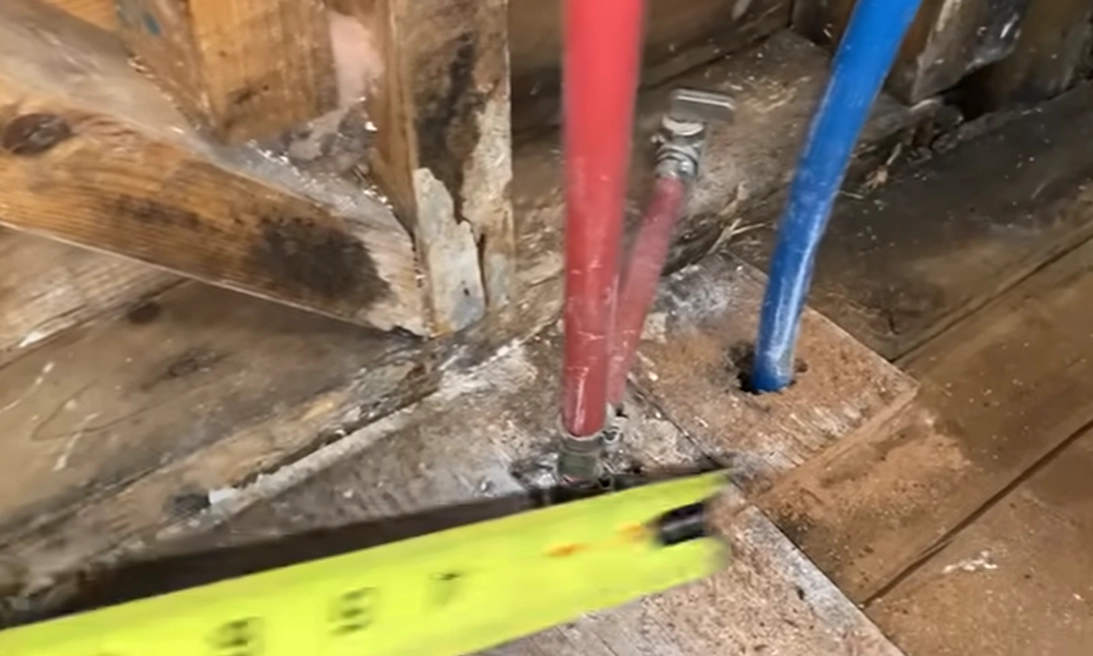
What burst water does to your house
Burst supply-line water starts as Category 1 — clean water. That’s the best news you’ll get in this situation: clean water can often be dried in place without the demolition that gray or black water requires.
But “clean” doesn’t mean “harmless,” and it doesn’t stay clean automatically:
- Drywall wicks water upward. A flooded floor becomes a soaked wall; baseboards and the bottom foot or two of drywall are usually the first casualties. Professionals check how far the water wicked before deciding what stays and what comes out.
- Hardwood cups and buckles. Memphis homes — especially older ones in neighborhoods like Chickasaw Gardens and along the Poplar corridor — often have original hardwood worth saving. Cupping (edges rising) can sometimes be reversed with proper drying; buckling (flooring pulling away from the subfloor) usually can’t. The difference between the two is measured in hours of response time.
- Insulation saturates silently. Blown or batt insulation above a ceiling or behind a wall holds water invisibly and dries poorly in place. It often has to come out even when the surrounding drywall looks fine.
- A clean job can be reclassified. Category 1 water that sits long enough — or contacts a floor drain, soil, or contaminated surface — can be rerated to Category 2 gray water, and the cleanup protocol and price follow. Speed doesn’t just reduce damage; it can keep your job in a cheaper category.
- Mold starts the clock immediately. In Memphis’s 60–80% summer humidity, mold can begin growing on soaked materials within 24 to 48 hours — in any season, if the indoor environment stays damp.
Insurance: the sudden vs. gradual distinction that decides your claim
This is the single most important insurance concept for burst pipes — and the one most homeowners have never heard of until an adjuster says it:
| Sudden & accidental | Gradual | |
|---|---|---|
| What it means | A pipe bursts tonight; a supply line fails without warning | A leak has been dripping inside a wall for months |
| Typical coverage | Usually covered — the resulting water damage is what homeowners insurance is built for | Usually excluded — insurers expect you to maintain your home |
| What adjusters look for | Fresh damage, a clear failure event | Stains, rot, or mold showing the problem predates the claim |
Two nuances that trip people up:
The pipe repair itself is often not covered. Standard policies typically cover the resulting water damage — the soaked drywall, the buckled floor, the drying and rebuild — but not the plumber’s bill for the pipe section that failed. That’s considered maintenance, not damage. This is the two-bills table from above, wearing an insurance costume.
“Sudden” means documented. An adjuster’s sudden-vs.-gradual judgment rests on evidence: photos taken the day of the loss, moisture readings from a professional assessment, and a clear timeline. If you discover the burst, photograph it before anything moves, and get the damage assessed and documented fast. Gradual leaks discovered late are the claims that die.
External flooding is a different policy entirely. If storm water or rising waterways entered your home rather than your plumbing, that’s flood insurance (NFIP) territory — standard homeowners insurance excludes it. In a river city with the Mississippi, Wolf River, Nonconnah Creek, and the Loosahatchie in play, knowing which policy covers which water is critical.
For the full playbook — documentation checklists, deductible math, what to hand your adjuster — see the insurance claims guide.
Keeping it from happening again
Once you’re dry, it’s worth making sure you never host this particular emergency twice:
- Know your shutoff and test it. A seized valve is the same as no valve. Replace old gate valves with quarter-turn ball valves — a plumber can do it in one visit.
- Insulate exposed pipes in attics, crawlspaces, and exterior walls — the three places Memphis freezes find first.
- Let faucets drip during hard freezes, and open cabinet doors under sinks on exterior walls. It’s the standing MLGW winterization guidance, and it works by keeping water moving and warm air circulating.
- Don’t set the heat below ~55°F when you’re away for a weekend or longer in winter. A saved heating bill is nothing against a burst-pipe restoration.
- Consider automatic leak detectors — sensors that shut off your water when they detect a leak. Homeowners who’ve lived through a multi-month restoration from an appliance overflow often describe this as the cheapest purchase they’ve ever made.
See preventing w
ater damage for the full seasonal Memphis checklists.
Not every water emergency is a pipe. If the source is a failed water heater, see our guide to water heater leaks in Memphis — the first steps, what cleanup costs, and who to call.
Who can fix a burst pipe in Memphis today?
Two different pros, in this order: a licensed plumber repairs the burst pipe and pressure-tests the system — restoration can’t finish while water is still flowing. A water damage restoration team handles everything the water touched: extraction, structural drying, and rebuilding. Call (901) 286-9686 to request help connecting with local professionals serving Memphis and Shelby County — and lead with the plumber if water is still flowing.
How much does it usually cost to fix a burst pipe?
Two bills: the plumber’s pipe repair (often a few hundred dollars for the pipe itself) and the restoration — drying and rebuilding everything the water touched, usually the larger cost. Nationally, homeowners average about $3,860 for water damage restoration (Angi 2026), with a fast-caught single-room Category 1 job benchmarking around $700–$2,000. If water ran for hours across multiple rooms, expect several thousand more. Shutting off your main valve immediately is the single biggest money-saver. These are national benchmarks, not Memphis quotes.
Can I repair a burst pipe myself?
You can stop the emergency yourself — shutting off the main valve is the most important repair you’ll ever make. For the pipe itself, get a plumber. Supply lines run under full household pressure, and a bad solder joint or an overtightened fitting on a permanent repair can fail again — often worse. Temporary patch kits exist for holding a line until a plumber arrives, but they’re stopgaps, not fixes. And even with the pipe patched, the water damage still needs professional drying — household fans don’t reach inside walls.
What to do if a water pipe bursts in your house?
Shut off your main water valve immediately — every minute of flow adds to the bill. If water is near outlets or the breaker panel, shut off electricity to the area only if you can do so safely; never touch water that may be energized. Photograph the water, the burst point, and damaged belongings before anything moves. Call a plumber for the pipe, then call for water extraction and drying. For the full numbered walkthrough, see What to do in the first 30 minutes.
Does homeowners insurance cover water damage from burst pipe?
Usually yes, when the burst was sudden and accidental — that’s exactly what homeowners insurance is built for. The resulting damage (soaked drywall, flooring, drying and rebuild) is typically covered; the pipe repair itself usually isn’t, since that’s considered maintenance. Gradual leaks that have been dripping for months are typically excluded. Document everything from day one: photos, the timeline, and a professional damage assessment.
Would water damage from a broken pipe be normally covered under my homeowners insurance?
Normally, yes — standard homeowners policies (HO-3 and similar) cover water damage from sudden, accidental plumbing failures like a burst pipe. The key word in adjuster language is “sudden”: a pipe that splits during a freeze is covered; a slow leak inside a wall that you’ve been ignoring for months typically isn’t. Note the split in coverage: the insurer generally pays for the damage the water caused, not the plumbing repair that caused it. If your deductible is $1,000–$2,500 and the restoration runs into the thousands — which it often does — claiming usually makes sense. Read the insurance claims guide before you call your carrier.
A burst pipe won’t wait — and neither should you.
Water is still spreading while you read this. Stop it at the valve, then get the professionals in: the plumber for the pipe, the restoration team for everything the water touched.
Call (901) 286-9686 — Request Burst Pipe Help
Memphis Water Damage Restoration · 4040 Delp St, Memphis, TN 38118 · Serving Shelby County & the Mid-South