
Water Heater Leaking in Memphis? Emergency Steps, Real Costs & Who to Call
If your water heater is leaking, the first hour decides whether you are paying for a plumber visit or a full restoration project. A standard tank holds 40 to 50 gallons, and a failed tank or supply line can keep releasing water until someone shuts it off. Memphis homeowners who act in the first 10 minutes usually limit the damage to one room. The ones who wait until morning often end up replacing flooring, drywall, and subfloor in three.
Here is exactly what to do, what it costs, and who to call first.
Step One: Stop the Water (First 10 Minutes)
- Shut off the water supply to the heater. Find the cold-water shutoff valve on the pipe entering the top of the tank and turn it clockwise. If it is stuck or missing, use your home’s main water shutoff instead.
- Turn off the power or gas. For an electric heater, flip its breaker. For gas, turn the control knob to “pilot.” Water and electricity around a failed appliance are a bad mix, and a drained tank with the heat still on can destroy the unit.
- Keep people and pets out of standing water until the power is off, especially if outlets or cords are nearby.
- Move what you can. Boxes, rugs, furniture, and anything stored on the floor near the heater. Every item you lift out of the water in the first hour is an item you probably will not have to throw away.
Do not start draining the tank into the room, and do not ignore a slow drip because it “looks small.” A pinhole leak that runs for a week behind a utility closet wall does more damage than a dramatic burst that gets shut off in five minutes.
Is It a Small Leak or a Tank About to Fail?
Where the water is coming from tells you how urgent this is:
- Puddle at the base of the tank — often a failing tank seam or corrosion. Tanks rarely heal. Plan on replacement.
- Dripping from the temperature-and-pressure (T&P) relief valve — sometimes a pressure problem a plumber can fix, sometimes an early warning of tank failure.
- Leak at a supply line or fitting — the most fixable scenario. The tank may be fine; the connection is not.
- Rust-colored water, rumbling noises, or a tank older than 10 years — residential water heaters typically last 8 to 12 years. Past that window, a leak is usually the first failure, not the last.
Whatever the source, the water on your floor is a separate problem from the plumbing — and it is the problem that gets expensive.
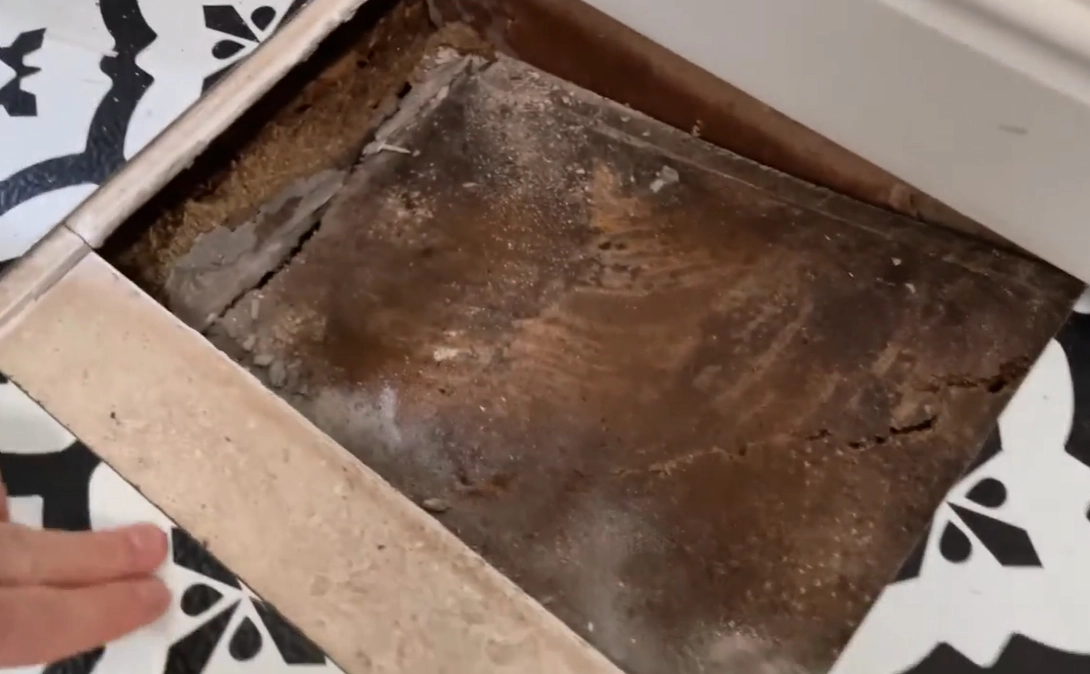
What a Water Heater Leak Actually Damages
Water heaters live in garages, utility closets, attics, and basements — and each location fails differently. An attic unit leaks down through ceilings. A closet unit soaks the subfloor and the walls you cannot see into. A basement unit can run unnoticed for days.
The damage chain looks like this:
- Flooring and subfloor — laminate swells, hardwood cups, and plywood subfloor softens and rots when it stays wet.
- Drywall — wicks water upward a foot or more above the visible waterline, far beyond the puddle you can see.
- Insulation — saturated insulation inside a wall cavity holds moisture against the framing for weeks.
- Mold — under warm, wet conditions, mold can begin growing within 24 to 48 hours. What starts as a plumbing problem becomes a mold remediation problem if drying waits.
This is why emergency water removal and structural drying — not just mopping — is the correct response once water has spread past a small contained puddle.
What Does Cleanup and Restoration Cost in Memphis?
Honest answer: it depends on how far the water traveled and how long it sat. A leak caught in the first hour, in a garage, on concrete, may need little more than extraction and a day of drying. The same leak discovered Monday morning in a carpeted closet can mean flooring removal, drywall cuts, subfloor repair, and mold treatment.
For context, the national benchmark average for water damage restoration is around $3,860 (Angi, 2026) — small contained jobs come in well under that, and multi-room jobs run well over it. Our full breakdown of what drives the number up or down is in the Memphis water damage restoration cost guide. Two rules of thumb that hold up on almost every job:
- Time is the biggest cost variable. Every day of delay adds damaged materials to the scope.
- Verbal estimates are a trap. Get the scope in writing, room by room, before work starts.
Will Insurance Cover a Water Heater Leak?
Usually, the dividing line is sudden versus gradual. A tank that bursts without warning is typically a covered event, including the resulting water damage to your home. A leak that dripped for months is often classified as a maintenance failure and denied. The water heater itself is almost never covered — the damage it caused is the claim.
Document everything before cleanup: photos of the tank, the water line it reached, and every affected room. Then read our Memphis insurance claims guide before you call the adjuster, so you know what they will ask for.
Plumber or Restoration Company — Who Do You Call First?
Both, in the right order:
- Call a plumber to repair or replace the water heater and confirm the source is stopped. (If the leak is actually a pipe, not the tank, see our burst pipe repair page.)
- Call a water damage restoration company the moment water has spread beyond a mop-and-bucket puddle — into flooring, walls, carpet, or another room. Plumbers fix plumbing. They do not extract water from your subfloor, dry your wall cavities, or treat for mold.
If you are standing in water right now, make the restoration call first and the plumber call second. Drying has a clock on it; the tank replacement does not.
Water Heater Leaking in Memphis Right Now?
Shut the water off, then call us. We handle the extraction, drying, and repairs — so a plumbing problem does not turn into a rebuild.
Frequently Asked Questions
Can I still use my water heater if it is leaking?
Shut it off. A leaking tank can fail completely without much warning, and running it risks a full 40-to-50-gallon release plus electrical or gas hazards. Use the shutoff steps above and get it assessed.
How fast does mold grow after a water heater leak?
Mold can begin growing within 24 to 48 hours on wet drywall, wood, and insulation. That is why professional drying in the first day matters more than any other step.
Does homeowners insurance pay for a new water heater?
Almost never for the appliance itself. Insurance typically covers the sudden water damage the failed heater caused to your home — floors, walls, belongings — not the unit’s replacement.
What if the leak is in my attic?
Attic water heaters are the highest-risk setup: water travels down through ceilings and walls before you ever see a stain. Treat any attic leak as urgent, shut the water off immediately, and expect ceiling and drywall inspection below the unit.
Standing water does not wait, and neither should you. If your water heater has leaked anywhere in the Memphis area, call (901) 286-9686 and we will walk you through the next step.